You finished the course, the infection cleared, and you're grateful. But now your gut feels off. More bloating, looser (or slower) bowels, and foods you used to be fine with suddenly don't sit well.
That's not in your head. Antibiotics are one of the biggest disruptors of your gut microbiome, the community of bacteria living in your digestive tract. The good news is that your gut can rebuild, and what you eat in the weeks and months afterwards makes a real difference.
When I take a gut history in my online practice, I always ask about antibiotics, right back to childhood. Below I'll walk you through what antibiotics do to your gut, how long recovery takes, and the steps I use to help clients rebuild, drawing on the gut health training I've done with Dr Jason Hawrelak.
First, antibiotics save lives
Let's be clear about this before anything else. When you need antibiotics, they can save lives, limbs and organs. Please don't stop a course early or skip one your doctor has prescribed because you're worried about your gut. Your gut can be supported afterwards. A bacterial infection left to run its course is a much bigger problem.
The issue is that antibiotics don't pick sides. They can't tell the bacteria making you sick from the hundreds of helpful species living in your gut, so they knock both down.
What antibiotics do to your gut microbiome
Picture your gut as a rainforest, with hundreds of species living in balance. A course of antibiotics is more like a bushfire. Some species are hit hard, some survive, and a few opportunists take over the space that's left.
The species that tend to take the biggest hit include the butyrate producers. Butyrate is a short-chain fatty acid your gut bacteria make from fibre. It's the main fuel for the cells lining your bowel, and it helps keep the gut lining strong and inflammation down. That's why gut recovery after antibiotics is about more than just "good bacteria" in general.
Every antibiotic affects the gut differently, and every person responds in their own way (Dethlefsen and Relman, 2011). Repeated courses add up: in that study, the gut recovered less completely after a second course than after the first.
How long does it take your gut to recover after antibiotics?
Longer than most people are told.
- In healthy young adults given a short, broad-spectrum course, most of the gut ecosystem was back close to normal within about six weeks. But nine common species, present in everyone beforehand, were still missing in most people six months later (Palleja et al., 2018).
- One course of clindamycin left measurable changes in gut bacteria for two years (Jernberg et al., 2007).
- After the antibiotic combination used to clear H. pylori (a stomach bacterium), some people's gut bacteria were still disrupted up to four years later (Jakobsson et al., 2010).
Older studies suggested the gut bounced back within a few weeks, but they used methods that couldn't see most gut bacteria. Newer DNA-based testing shows a slower, more individual recovery. That's not a reason to panic. It's a reason to give your gut real support, rather than assuming it will sort itself out.
Signs your gut hasn't bounced back
- Bloating, wind or tummy discomfort that's new or worse since the course
- Bowel changes: looser, more urgent, or slower than before
- Foods you used to tolerate now causing symptoms
- Thrush or other yeast overgrowth (see candida overgrowth)
- Feeling generally flat, or picking up every bug going
These can have other causes too, so they're a reason to look closer, not proof that antibiotics are to blame.
See your GP straight away if…
You have severe, watery or bloody diarrhoea, a fever, or tummy pain during or after antibiotics, or diarrhoea that doesn't settle. Antibiotics can allow an infection called Clostridioides difficile (C. diff) to take hold, and it needs medical care.
Step-by-step: how to restore gut health after antibiotics
Step 1: During the course, protect what you can
Taking a researched probiotic alongside antibiotics is the best-supported use of probiotics there is. A 2021 review of 42 trials found it lowered the risk of antibiotic-associated diarrhoea in adults by about a third (Goodman et al., 2021).
The two most studied are Saccharomyces boulardii, a beneficial yeast that cut antibiotic-associated diarrhoea from about 19% to under 9% across 21 trials (Szajewska et al., 2015), and Lactobacillus rhamnosus GG (LGG). The strain matters more than the number on the label: a single well-researched strain can outperform a high-dose blend.
A few practical points. Take a bacterial probiotic a couple of hours away from your antibiotic dose. S. boulardii is a yeast, so the antibiotic doesn't kill it. And if you're seriously unwell, immunocompromised or have a central line, check with your doctor before taking any probiotic.
Step 2: Feed the survivors
This is the step most people skip, and it's the most important one. As Dr Jason Hawrelak puts it, the job after antibiotics is to feed up the bacteria that survived so they can regrow. Recovery is a feeding problem before it's a reseeding problem.
Your gut bacteria feed on fibre and other plant compounds your own body can't digest. When they ferment them, they make short-chain fatty acids like butyrate (Makki et al., 2018). The more variety of plant foods you eat, the more different bacteria you feed. Foods I lean on:
- Oats, and legumes like lentils and chickpeas
- Cooked-and-cooled potato or rice, and slightly green banana (rich in resistant starch)
- Onion, garlic and leek
- Ground flaxseed
- Colourful plants rich in polyphenols: berries, green tea, herbs and spices
If you have IBS or SIBO, several of these are high-FODMAP, so start with small amounts and build up slowly, or get help to find your level. More on the difference between these foods and probiotic supplements in probiotics vs prebiotics.
Step 3: Choose probiotics wisely after the course
Probiotics can still help after the course, but they don't replace the species you lost. Most probiotic strains pass through rather than settling in, so think of them as support while your own bacteria regrow.
You might have seen headlines about a 2018 study where probiotics slowed gut recovery after antibiotics (Suez et al., 2018). Dr Hawrelak's view, which I share, is that the finding applies to the particular product used in that study, whose bacteria inhibit normal gut bacteria, and not to probiotics in general. It's one more reason to choose strains with research behind them.
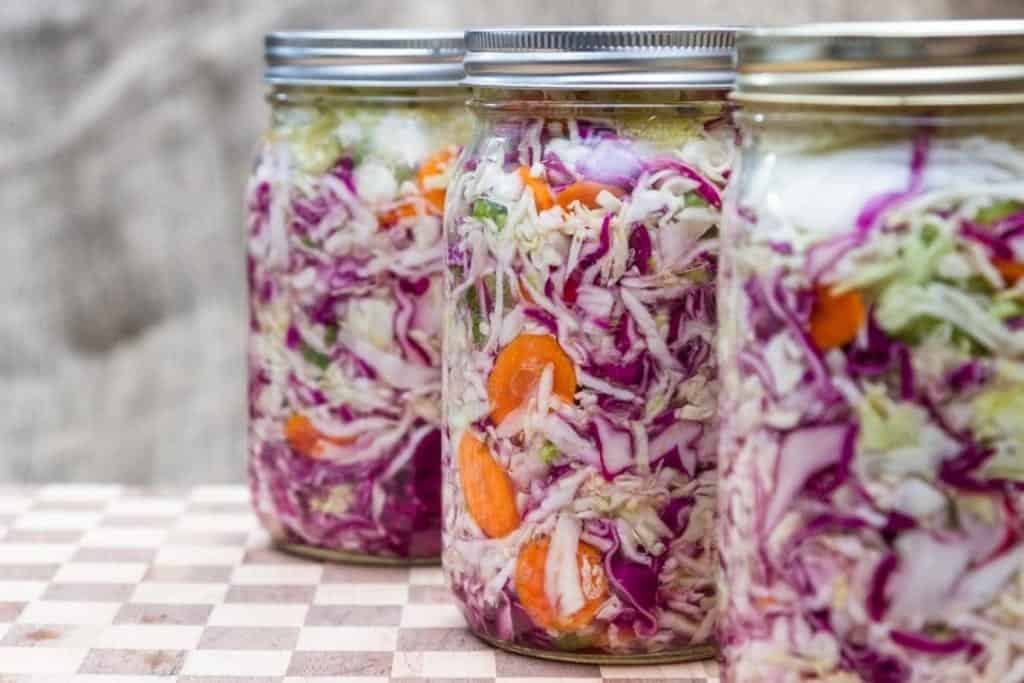
Fermented foods like kefir, yoghurt and kombucha can be part of a healthy diet if they suit you. Most of their bacteria pass through rather than settling in your gut long term, but they may still help while they're there, and one study found that eating them regularly increased the variety of gut bacteria (Wastyk et al., 2021). They're optional, not essential. What your own gut bacteria need most is a wide variety of plant foods.
Step 4: Ease the extra load
While your gut is rebuilding, give it less to fight. Cut back on ultra-processed food, alcohol and added sugar, all of which can feed the wrong bacteria (see how to starve bad gut bacteria). If you take other medicines that affect the gut, like acid-blockers or anti-inflammatories, talk to your GP about whether you still need them, but don't stop them on your own. There's more on what disrupts your gut in 10 common culprits behind gut microbiome imbalance.
Step 5: Look after stress and sleep
Stress affects your gut directly. Stress hormones can encourage the growth of less helpful bacteria, and a stressed nervous system slows digestion. Sleep, gentle movement and whatever helps you switch off all count. I explain the gut–brain link in stress and digestion.
Step 6: Protect your gut next time
Antibiotics don't work on viruses, so they won't help most colds, flu or sore throats. If you're prescribed antibiotics for something that might be viral, it's fine to ask your GP, "Is this bacterial, and do I need these?" And if you do need them, take them, and come back to Step 1.
When it's more than a slow recovery
Sometimes the gut doesn't settle on its own. Antibiotics can be one of the things that sets the scene for bacterial overgrowth or ongoing IBS-type symptoms. If you're still bloated, uncomfortable or reacting to foods months after a course, it's worth looking deeper. What is SIBO? and 10 warning signs of SIBO are good places to start, and leaky gut solutions covers the gut lining side.
Where to start
If you've had a course (or several) of antibiotics and your gut hasn't felt right since, please know it's not your fault and it's not all in your head. Your gut bacteria took a real hit, and they can be rebuilt.
If you'd like a structured way to do Step 2 at home, my self-paced Microbiome Method — Feed Your Flora program walks you through feeding your gut bacteria over three weeks.
Not sure what is behind your gut symptoms?
Bloating, reflux or an unpredictable gut after antibiotics can come from a few different patterns. Take my free 2 minute Gut Symptoms Quiz to see which pattern your symptoms most closely match. I will email your result to you.
Frequently asked questions
Should I take probiotics with antibiotics?
For most people, a researched probiotic taken during the course can lower the risk of antibiotic-associated diarrhoea. Saccharomyces boulardii and LGG have the most evidence. Check with your doctor first if you're seriously unwell or immunocompromised.
How long after antibiotics should I take probiotics?
You can start during the course, spaced a couple of hours from your antibiotic dose, and continue for a few weeks afterwards. Feeding your own gut bacteria with fibre-rich plant foods matters just as much.
What should I eat after antibiotics?
A wide variety of plant foods: vegetables, fruit, oats, legumes, nuts and seeds, plus cooked-and-cooled potato or rice for resistant starch. Go gently if you have IBS or SIBO.
How long does it take for gut bacteria to recover after antibiotics?
Most of the ecosystem returns within weeks to a couple of months, but some species can take many months or longer, and some may not come back without help. It depends on the antibiotic, how many courses you've had, and your diet.
Will yoghurt or kefir restore my gut after antibiotics?
They can be part of a healthy diet if they suit you, but their bacteria aren't the same species that live in your bowel, so they don't replace what you lost. Fibre and plant variety do more of the heavy lifting.
References
- Dethlefsen L, Relman DA. Incomplete recovery and individualized responses of the human distal gut microbiota to repeated antibiotic perturbation. Proc Natl Acad Sci USA. 2011;108 Suppl 1:4554–4561. PubMed 20847294 · PMC3063582
- Goodman C, et al. Probiotics for the prevention of antibiotic-associated diarrhoea: a systematic review and meta-analysis. BMJ Open. 2021;11(8):e043054. PubMed 34385227 · PMC8362734
- Jakobsson HE, et al. Short-term antibiotic treatment has differing long-term impacts on the human throat and gut microbiome. PLoS One. 2010;5(3):e9836. PubMed 20352091 · PMC2844414
- Jernberg C, et al. Long-term ecological impacts of antibiotic administration on the human intestinal microbiota. ISME J. 2007;1(1):56–66. PubMed 18043614
- Makki K, et al. The impact of dietary fiber on gut microbiota in host health and disease. Cell Host Microbe. 2018;23(6):705–715. PubMed 29902436
- Palleja A, et al. Recovery of gut microbiota of healthy adults following antibiotic exposure. Nat Microbiol. 2018;3(11):1255–1265. PubMed 30349083
- Suez J, et al. Post-antibiotic gut mucosal microbiome reconstitution is impaired by probiotics and improved by autologous FMT. Cell. 2018;174(6):1406–1423. PubMed 30193113
- Szajewska H, et al. Systematic review with meta-analysis: Saccharomyces boulardii in the prevention of antibiotic-associated diarrhoea. Aliment Pharmacol Ther. 2015;42(7):793–801. PubMed 26216624
- Wastyk HC, et al. Gut-microbiota-targeted diets modulate human immune status. Cell. 2021;184(16):4137-4153. PubMed 34256014